Services Recovery Ransomware AKIRA
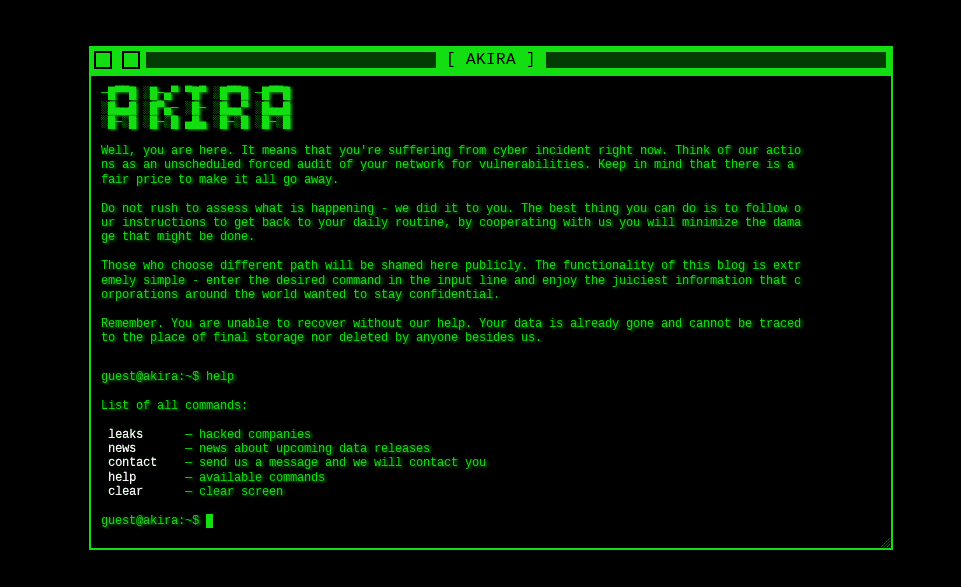
🔍 What is Akira Ransomware
According to reports from various cybersecurity institutions:
-
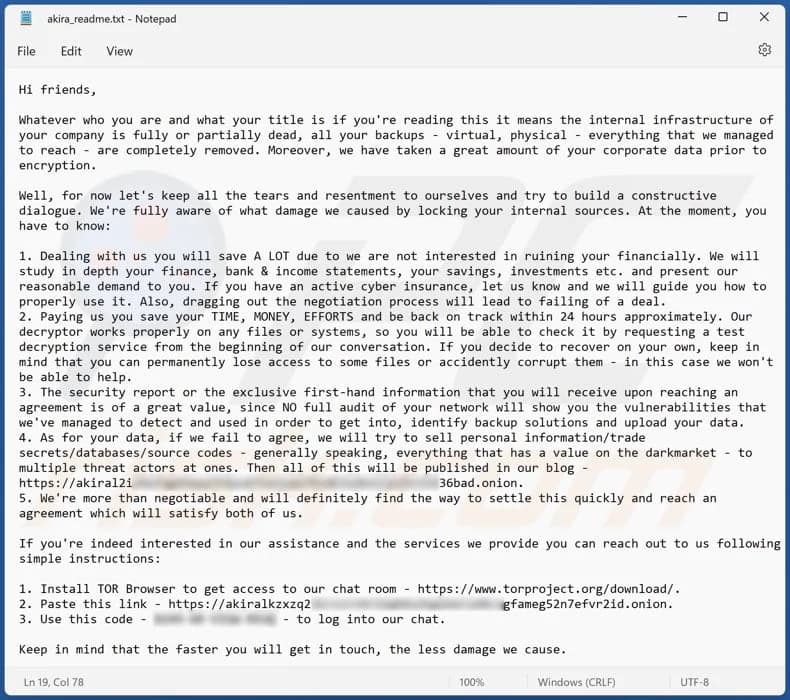
Akira emerged around March 2023 as a new ransomware family.
-
It operates under Ransomware-as-a-Service (RaaS), meaning the core operators provide the malware and infrastructure to affiliates who launch the attacks.
-
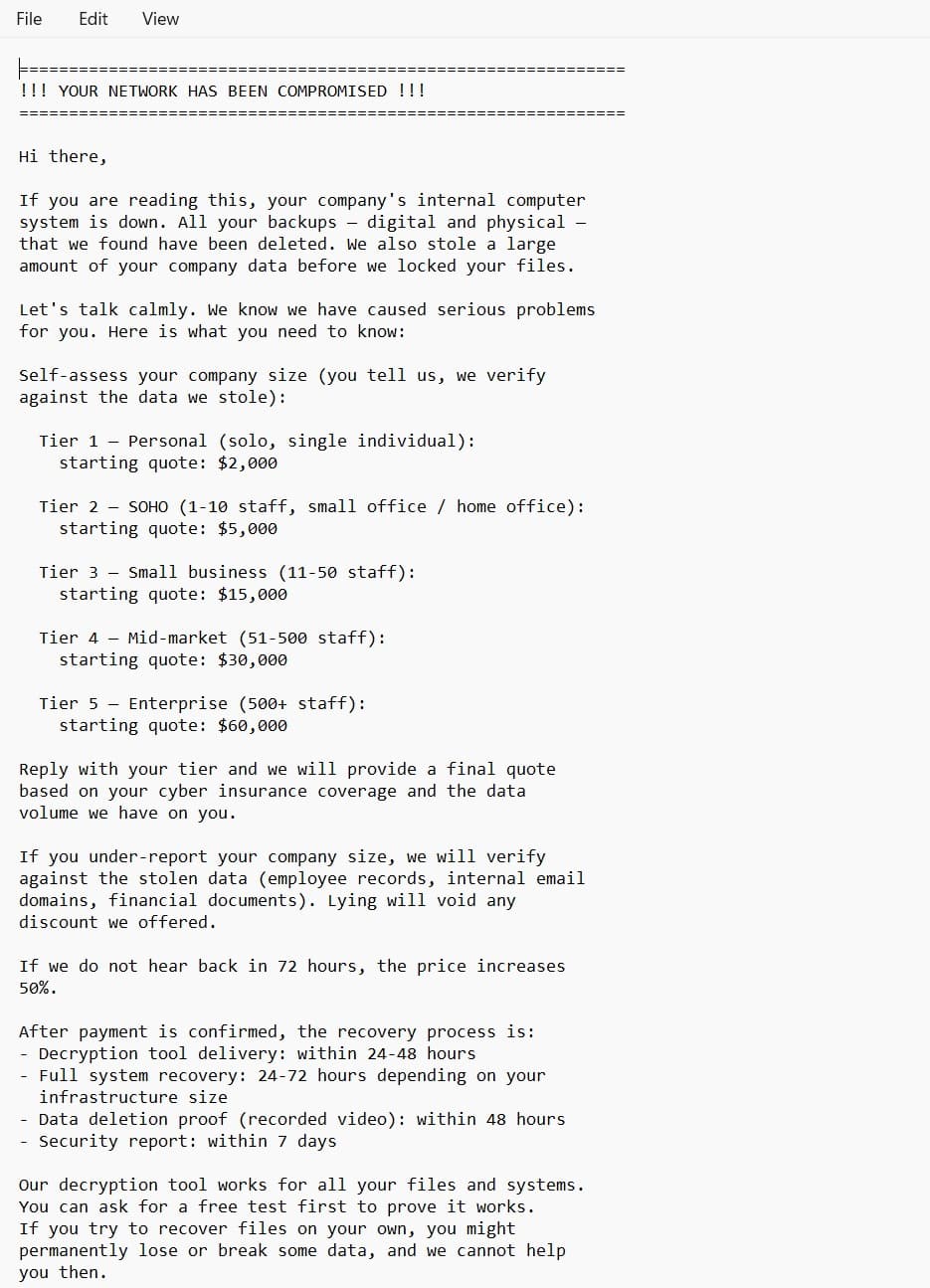
It uses double extortion: data is stolen (exfiltrated) before or during encryption, and attackers demand ransom not only to unlock files but also to prevent sensitive data from being leaked publicly.
-
Akira has variants for Windows and Linux, sometimes targeting VMware ESXi virtual machines. Some newer variants are written in modern languages such as Rust.
-
It typically encrypts files with the extension “.akira” (and in some cases other extensions depending on the variant).
⚠️ How Akira Spreads / Attack Vectors
Several known attack vectors include:
| Vector / Stage | Details |
|---|---|
| Exploiting VPN / firewall vulnerabilities | Attacks via VPN without MFA, or firewalls/SSL VPNs with known vulnerabilities. |
| Phishing emails / malicious attachments | Attachments or links in emails that deliver malware payloads. |
| Credential compromise / stolen passwords | Gaining access through leaked, reused, or stolen account credentials. |
| Deleting backups & shadow copies | To make restoring from backups or recovery points extremely difficult. |
| Security evasion (anti-detect / LOLBins / legitimate tools) | Using built-in system tools (Living Off The Land Binaries / LOLBins) to hide ransomware activity. |
🛡 Implications & Impact
-
Due to double extortion, victims face two risks: loss of access to data and public exposure of sensitive information if ransom is not paid.
-
Ransom demands are often very high, especially against organizations with critical data.
-
Recovery becomes highly challenging if backups are not properly maintained or isolated.
🛠 Solutions Provided by Recovery Ransomware Indonesia
As a ransomware data recovery provider in Indonesia, here are solutions tailored for Akira ransomware attacks, including preventive and recovery measures:
1. Incident Analysis & Digital Forensics
-
Identify the Akira variant, entry methods, and attacker command sequences.
-
Analyze infected files/logs to determine whether data was stolen or only encrypted.
-
Detect whether shadow copies were deleted, backups are intact, and which access points (VPN/remote) were exploited.
2. Data Recovery from Backups / Clean Copies
-
Identify clean, uncompromised backups.
-
Restore data from offline/air-gapped backups.
-
Validate the integrity of restored files.
3. Decryption / Decryptor Tools
-
Use public decryptors if available for the Akira variant.
-
Assess decryptor safety and ensure no added risks.
4. Ransom Response & Negotiation Advisory
-
Advise whether paying ransom is relevant and explain associated risks (including reputation damage and data leakage).
-
Coordinate with legal authorities if necessary.
5. System Cleaning & Remediation
-
Remove malware, patch systems, and strengthen security configurations (e.g., fix VPN vulnerabilities, enforce MFA).
-
Ensure no backdoors are left behind.
6. Preventive Measures
-
Cybersecurity awareness training for staff (detecting phishing, malicious links).
-
Regular patch management and software updates (firewalls, VPN, endpoints).
-
Implement endpoint protection/EDR solutions to detect suspicious ransomware behavior.
-
Network segmentation to limit spread if one system is compromised.
-
Enforce regular backups with 3-2-1 strategy and periodic recovery testing.
7. Monitoring & Threat Intelligence
-
Monitor for credential theft or potential data leaks.
-
Leverage global and local threat intelligence feeds to detect new Akira variants.
🚀 Why Choose Recovery Ransomware Indonesia
-
Ransomware & Cybersecurity Specialists
-
Focused on ransomware recovery, not just generic IT or basic data recovery.
-
Experienced with multiple variants: Akira, LockBit, BlackCat/ALPHV, Hive, MedusaLocker, Cicada3301, BEAST, MKP, and more.
-
-
Global Standard Experience
-
Strong understanding of local Indonesian attack contexts, aligned with international best practices.
-
-
Legal & Ethical Approach
-
Does not immediately recommend ransom payment.
-
Prioritizes technical and secure recovery options.
-
-
Advanced Forensic & Recovery Tools
-
Uses official decryption tools (e.g., NoMoreRansom Project).
-
If unavailable, performs forensic data carving to restore files.
-
-
Safe Negotiation Assistance
-
Mediates negotiations if unavoidable.
-
Validates decrypted sample files.
-
Protects company identity.
-
Provides risk analysis: chance of recovery vs. reputational damage.
-
-
Fast & Responsive
-
24/7 emergency services.
-
Critical to reduce downtime and minimize financial losses.
-
-
Operational Recovery + Long-Term Prevention
-
Helps companies run Business Continuity Plans (BCP).
-
Implements preventive solutions: MFA, 3-2-1 backup, patch management, EDR/XDR.
-
Provides localized employee training for phishing and social engineering.
-
-
Reputation & Trust
-
Trusted by businesses across finance, manufacturing, retail, healthcare, and government sectors in Indonesia.
-
Proven high recovery success rates with strong client testimonials.
-
✅ Conclusion
Recovery Ransomware Indonesia excels because:
-
It specializes in ransomware and cybersecurity, not just general IT.
-
Combines local expertise with global standards.
-
Provides a complete solution: analysis, recovery, negotiation, forensics, and prevention.
-
Transparent and professional in handling ransomware cases — unlike unreliable “middleman” who claim to use mysterious quantum server decryptors