
Clear & Transparent Costs
No hidden fees. The payment scheme is based on initial analysis and mutually agreed upon.
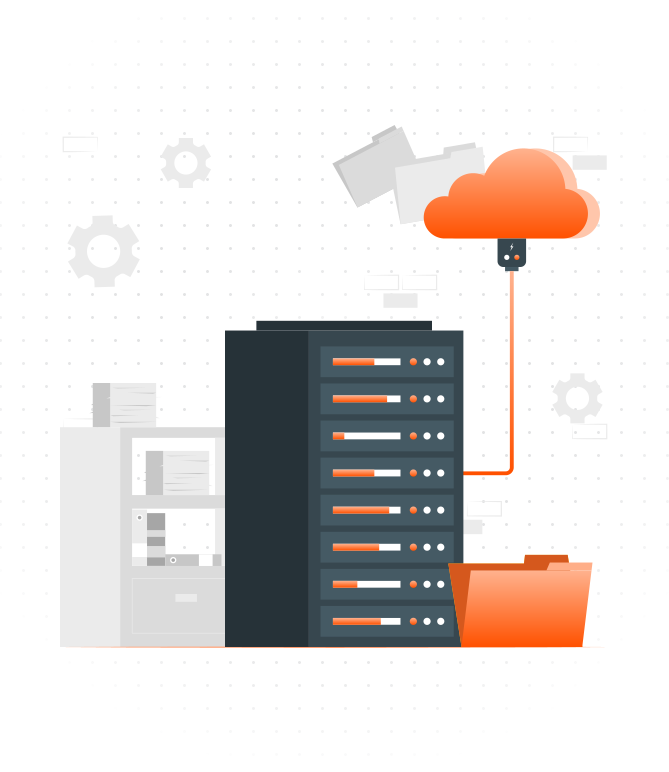
Lost important data from a damaged Server RAID 1-10? Our specialists are ready to help recover it through a fast, secure, transparent process with no hidden fees.
Supports recovery for all Server RAID brands:





About the Service
Recovery Ransomware Indonesia provides professional data recovery services for Server RAID levels 1 through 10, including RAID 0, 1, 5, 6, 10, and other variations. We handle physical drive failures, array degradation, and failed rebuilds. With experience and proven methods, our team ensures accurate recovery without risking further data loss.
We understand the complexity of RAID systems and the critical nature of server data. Our recovery process is designed to minimize downtime and preserve the integrity of your RAID structure and files.
Server RAID Issues
RAID Server (RAID 1–10) are array-based storage systems combining multiple hard drives for performance and redundancy. Despite their resilience, they remain vulnerable to physical failure, system corruption, and logical errors. If your RAID fails, critical data could be at serious risk. Our experts recover data from issues including disk failure, array degradation, and rebuild failure.
Our Advantages
Since 2016, we have recovered data from damaged Server RAID 1-10 arrays, whether due to physical failures, system errors, or logical corruption. With experience, precision, and proven techniques, we ensure your data is recovered safely and completely.
No hidden fees. The payment scheme is based on initial analysis and mutually agreed upon.
Thousands of cases solved with a high success rate using proven methods.
Recovery is carried out efficiently without disrupting your core systems or business operations.
Our team is ready to assist you at any time, including in critical and emergency situations.
Handled by cybersecurity and digital forensics experts with over 9 years of experience.
Non-Disclosure Agreement (NDA) available to ensure data confidentiality and prevent leakage.